
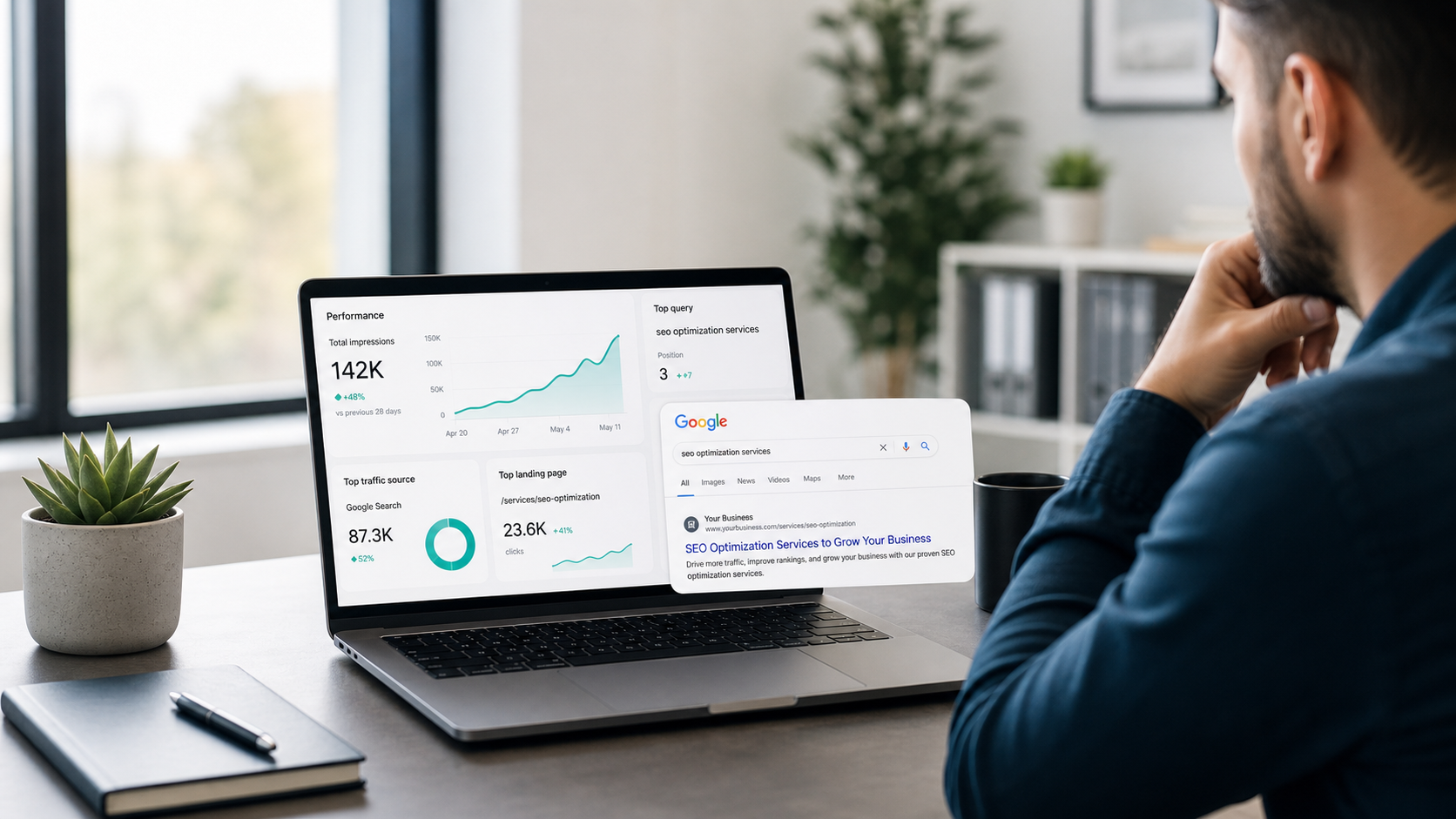
A lot of business owners are frustrated because they launched a website and expected the leads to start rolling in. That’s a common expectation, but it’s not how the web works anymore.
A website is not a magic switch. It’s more like opening a store in a city with millions of other stores competing for attention. If no one can find you, understand what you do, or trust that you can solve their problem, traffic will stay low no matter how good the site looks.
The Biggest Mistake: Thinking Launching a Website Is the Finish Line
One of the biggest misconceptions I see is that once a website is built, the job is done. In reality, launch day is just the starting point.
Too many owners treat a website like a brochure:
-
- Build it.
-
- Publish it.
-
- Leave it alone.
That approach almost never works. If the site isn’t being actively improved, optimized, and supported with useful content, it will usually fade into the background.
Google is not looking for websites that simply exist. It is looking for sites that are active, relevant, and helpful. That means the sites that continue to grow are usually the ones that keep earning their place over time.
What I See Most Often
In my experience, low-traffic websites usually fall into one or more of these buckets:
-
- The website was built poorly by someone who wasn’t thinking about search visibility.
-
- The site was built with a DIY tool, by an overseas freelancer, or by AI with little strategic oversight.
-
- Nobody is doing anything after launch to help Google find and trust the site.
-
- The site doesn’t clearly explain what the business does or what problem it solves.
That combination is a recipe for invisibility.
A good-looking website can still fail if it’s not built with search intent, structure, and clarity in mind. Design matters, but design alone does not create traffic.
A Real Example From My Work
One of the clearest examples I’ve seen was a truck wash for semi-trucks in South Dakota.
When I first looked at the site, they weren’t indexed on Google, which meant they were basically invisible. No indexing means no meaningful chance of showing up in search results, and no visibility means no traffic.
We changed that by focusing on a few core things:
-
- We got the site registered with Google so it could be indexed.
-
- We optimized their pages around the keywords their customers were actually searching for.
-
- We wrote blog posts that answered the most common questions their potential customers were asking.
The result was dramatic. In just one month, they went from being completely invisible on Google to getting 27,000 impressions and almost 150 potential leads.
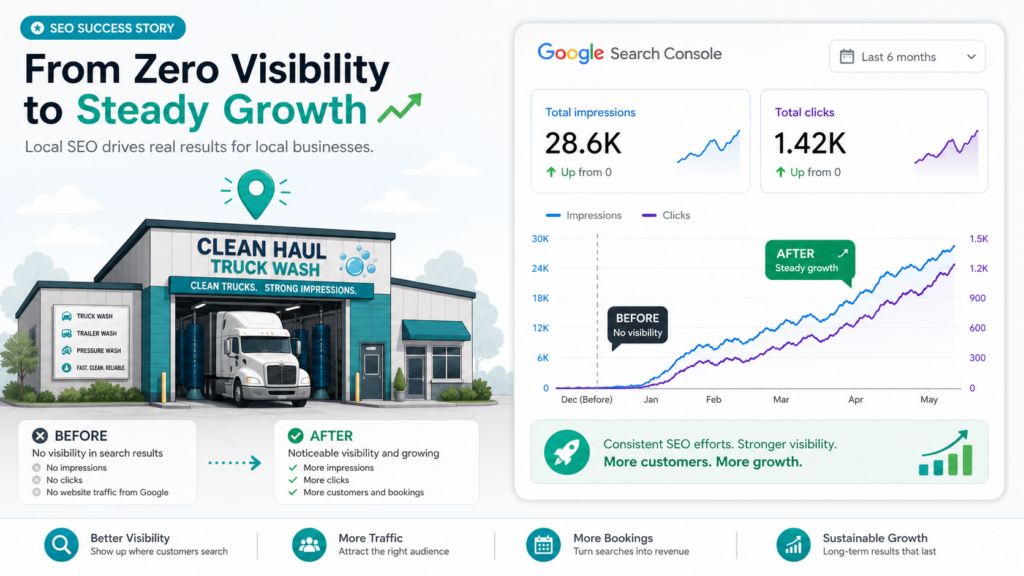
That kind of turnaround is exactly why I push back when people say traffic is random. It usually isn’t. More often, the site simply wasn’t set up to be found.
Why Good-Looking Doesn’t Mean Effective
A lot of business owners naturally focus on design first. That makes sense, because everyone wants a website that looks professional.
But there’s a big difference between a site that looks good and a site that performs well.
A beautiful website can still fail if:
-
- Search engines can’t understand it.
-
- The pages don’t target the right topics.
-
- The messaging is vague.
-
- It doesn’t answer the questions buyers are actually asking.
-
- There’s no ongoing content or SEO effort behind it.
I tell people this all the time: a website should not just look credible, it should communicate value clearly and help Google connect the business with the right audience.
What Google Wants
Google is trying to give searchers the most helpful result for their query. That means it tends to reward sites that show signs of usefulness, activity, and trust.
From my perspective, that usually comes down to a few things:
-
- Clear service pages that explain what the business does.
-
- Content that answers real customer questions.
-
- Ongoing updates that show the site is alive.
-
- Good structure so Google can understand the site.
-
- Enough topical depth to prove expertise.
In other words, Google is not just ranking websites. It is ranking usefulness.
If your site doesn’t help the visitor understand what you do, why it matters, and why they should trust you, it will struggle to gain traction.
Traffic Takes Work
One of the biggest truths I’ve learned is that traffic works a lot like almost anything valuable in life: it takes work.
That’s not the answer most people want, but it’s the honest one.
Getting traffic usually requires:
-
- Building the site correctly.
-
- Making sure it can be found.
-
- Clarifying what you offer.
-
- Publishing content that answers real questions.
-
- Keeping the site active over time.
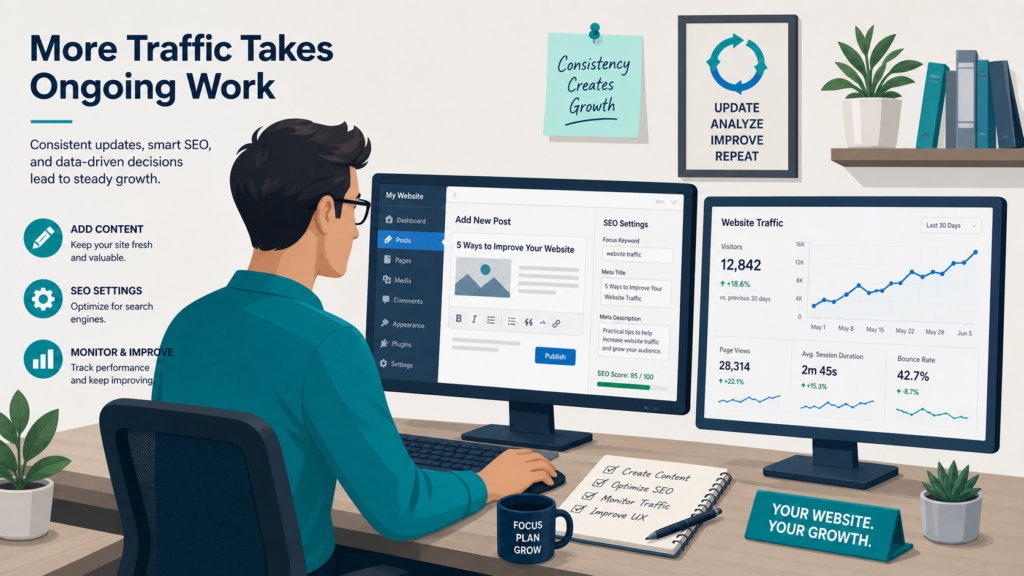
There is no shortcut that replaces consistency. You can absolutely accelerate results with smart strategy, but you still have to do the work.
Reputation With Google Takes Time
I often compare Google visibility to building a reputation in real life. When people first meet you, they don’t fully trust you yet. Over time, as they see you show up consistently and prove yourself, trust grows.
Google works in a similar way.
A website doesn’t usually become a trusted source overnight. It earns that trust by:
-
- staying active,
-
- publishing helpful content,
-
- covering topics thoroughly,
-
- and showing that it is a real, legitimate business with value to offer.
That is why consistent inbound traffic is rarely an instant outcome. It usually comes from compounding effort over time.
The Three Questions I’d Ask First
When a website is not getting traffic, I usually start by asking:
-
- Can Google even find the site?
-
- Does the site clearly communicate what the business does?
-
- Is anyone actively helping the site grow?
If the answer to any of those is no, the traffic problem is usually not mysterious. It’s strategic.
A lot of sites don’t need a complete reinvention. They need a clearer foundation, better optimization, and a real plan for earning visibility.
What Business Owners Should Do Instead
If you want your website to actually generate traffic, here’s the mindset shift I recommend:
-
- Treat your website like a living asset, not a one-time project.
-
- Build pages around the services and questions your customers actually care about.
-
- Make it easy for Google to crawl, understand, and trust the site.
-
- Publish content that answers real search intent.
-
- Keep improving over time instead of assuming launch day is enough.
That approach is slower than wishful thinking, but it works.
Final Thought
If your website isn’t getting traffic, the answer is usually not that the internet is unfair or that your business is too small. More often, it means the site was not built, maintained, or positioned in a way that makes it easy to find.
Traffic is earned. Visibility is built. Reputation takes time.
And if you’re willing to put in the work, a website can become one of the most valuable lead sources your business has.
